Operational platforms for complex workflows
Operational software engineered around exact workflow requirements — integrating data, governance, and operational context into a single controlled system built for real use.
Discipline
Operational software
Technology
Full-stack custom build
Environment
Engineering operations
Delivery
Discovery to evolution
Overview
What an operational platform is
A bespoke engineering platform is a custom-built operational system that reflects how your organisation actually works — not a generic application adapted from a template at the edges.
These platforms are characterised by close integration with existing systems and data, structured workflow logic with proper governance, and a design that prioritises long-term maintainability and operational fit. They are built for daily use by real operational teams in demanding environments.
Challenges
Problems it solves
Engineering operations that require exact workflow control, governance, and integration precision consistently outgrow generic software. The problems compound until a dedicated system is the only rational answer.
Manual and fragmented workflows
Operations running on email, spreadsheets, and shared drives accumulate risk, overhead, and inconsistency. What should be controlled becomes dependent on individual discipline.
Poor auditability
Without structured records and controlled workflow states, compliance becomes difficult and retrospective reviews require manual reconstruction from scattered evidence.
Disconnected tooling
Multiple disconnected systems create integration points that break, knowledge that escapes between tools, and processes that require constant manual translation.
Generic platform mismatch
Off-the-shelf enterprise software is designed for the average case. Engineering environments have requirements that generic products consistently fail to meet with the precision the work demands.
Technical debt accumulation
Platforms built without architectural discipline do not scale well. Bolt-on features, workarounds, and system brittleness compound over time until the system becomes a liability.
What's included
What the platform includes
Operational platforms are defined by the precision of their architecture. These are the structural layers that determine whether the system genuinely serves operations.
Workflow engine
Structured operational processes with explicit states, transitions, rules, and handoffs — the operational logic of the platform made concrete and enforceable.
- State machine workflow design
- Controlled transitions and validations
- Role-appropriate task allocation
Permissions and role model
Access controls that reflect how the organisation actually operates, without over-engineering a system that becomes difficult to administer over time.
- Role-based access design
- Contextual and state-aware permissions
- Audit-ready access records
Data model
A structured representation of assets, records, documents, and operational entities — the information architecture that everything else depends on.
- Asset and entity modelling
- Document and record structure
- Versioned and traceable data
Integration architecture
Connections to existing systems, APIs, and data sources the platform must coexist with — designed for reliability, not just technical feasibility.
- External system integrations
- API design and data contracts
- Event and data pipeline architecture
Reporting and visibility
Configurable views and exports that surface the information needed for decisions, compliance reviews, and operational oversight — without requiring manual assembly.
- Operational dashboards and summaries
- Compliance and audit reporting
- Configurable data exports
Work
Systems we have built
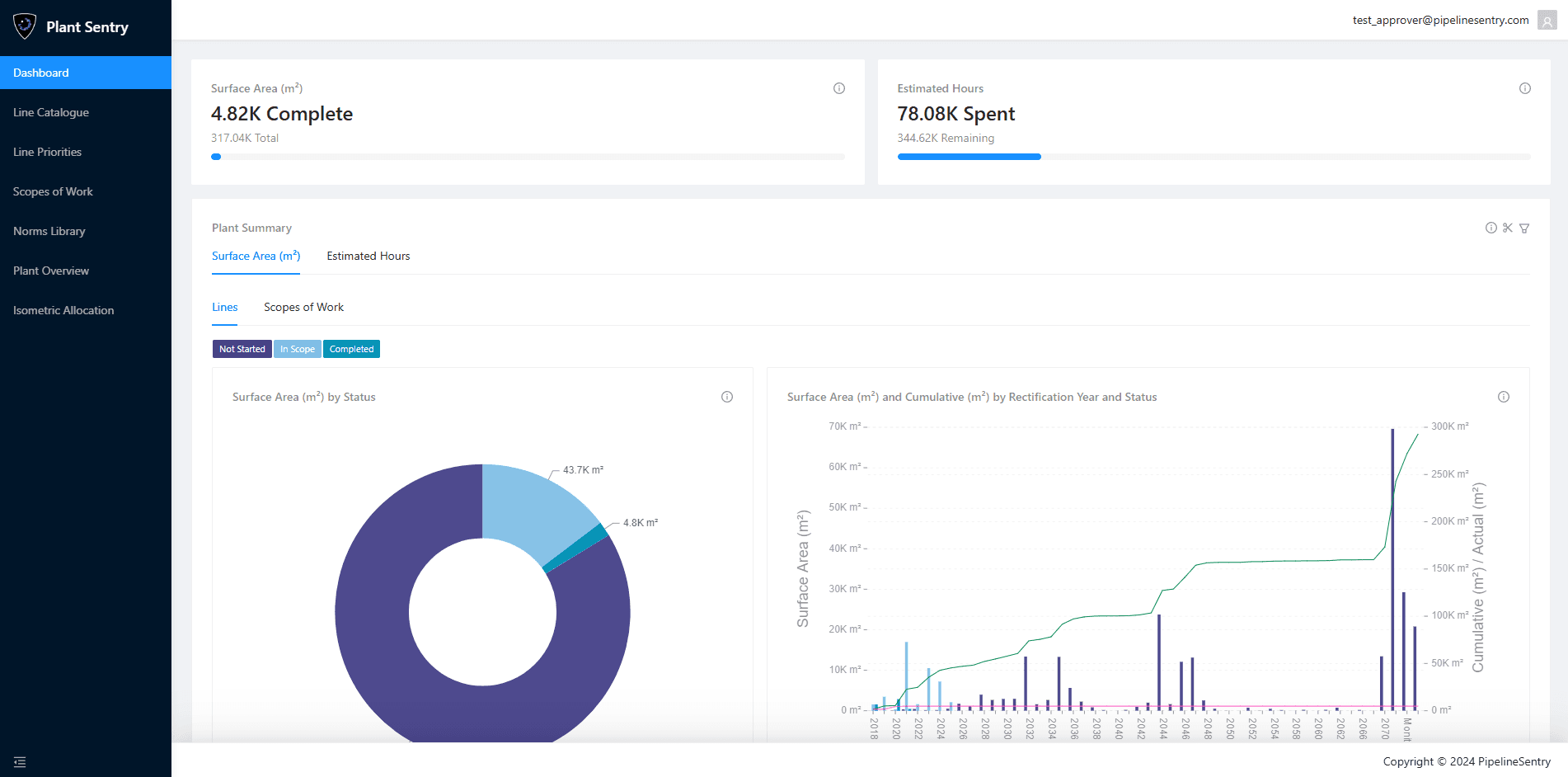
PlantSentry demonstrates what an engineering platform looks like at production scale — a real system replacing fragmented tooling with a single controlled operating model.
Approach
How we structure delivery
Bespoke platforms require thorough understanding of the actual operational process before any system design begins. We build that understanding before committing architecture.
Process mapping
Document how operations actually work before designing the system. This prevents building software around assumptions that do not hold under real conditions.
Architecture definition
Define the data model, workflow logic, integration points, and governance structure. Design decisions taken here have compounding effects on everything that follows.
Staged implementation
Deliver working software incrementally, validating at each stage against real operational conditions before proceeding to the next.
Integration and testing
Connect to existing systems, test against real data, and resolve edge cases before launch. Integration problems discovered early are orders of magnitude cheaper to fix.
Long-term partnership
Most bespoke platforms evolve significantly after launch. We plan for ongoing development from the beginning rather than treating delivery as a final handoff.
Who it's for
Designed for engineering-led operations
Operational platforms are the right choice when operational complexity, compliance requirements, or integration precision make generic tools unsuitable.
Roles
Sectors
Start with strategy
An operational platform for your team
Tell us how your team works and where the operational friction is. We'll design a system that fits exactly, performs in production, and scales as your operation grows.
Tell us about the project
A short description of the problem, the context, and what you need to achieve is enough to get started.
We scope it together
We will map the constraints, define what is realistic, and put together a build plan that can actually be delivered.
We build and ship it
Production-grade delivery with clear communication throughout. One team, one build, no gaps in between.