Configuration systems for complex technical products
Rules-driven platforms that let users configure, inspect, and validate complex product variants with confidence — combining accurate logic, interactive 3D, and technical output generation.
Discipline
Configuration & commerce
Technology
Logic + 3D + output gen
Environment
Manufacturing & sales
Delivery
Data audit to launch
Overview
What a product configurator platform is
A product configurator is a structured digital system that lets users explore, define, and validate complex product variants — with confidence that what they see accurately reflects what can be built.
Beyond selection interfaces, production-grade configurators enforce rules, generate technical outputs, connect to product data systems, and support both internal engineering teams and external sales processes at scale.
Challenges
Problems it solves
Industrial and manufactured products with complex configuration options create consistent problems that static documentation, spreadsheets, and manual processes cannot reliably solve.
Product complexity
Industrial products with many variants and dependencies cannot be communicated reliably through static documents. Manual configuration introduces errors that are expensive to catch late in the process.
Configuration errors
Manual processes allow invalid configurations through. Engineering and operations discover mistakes at the point of manufacture or delivery — when the cost of correction is highest.
Poor product communication
Technical sales teams struggle to communicate product capabilities without interactive tools. Complex products are difficult to explain clearly without being able to show them.
Slow specification generation
Generating accurate technical documentation from configuration data is time-consuming and error-prone when assembled manually by engineering teams.
Disconnected product data
Configurators that do not connect to real product data become stale and untrustworthy — leading to outputs that do not match current manufacturing capability.
What's included
What the platform includes
A reliable product configurator is a composed system. These are the structural layers that determine whether users and engineering teams can trust the output.
Configuration logic engine
The rules that determine which options are valid given selected parameters. The core of any reliable configurator — and the most important layer to get right before anything else.
- Option dependency modelling
- Validity rules and constraint logic
- Configuration state management
Product data model
A structured representation of product families, variants, components, and their interdependencies — the authoritative source of what can be configured.
- Product family taxonomy
- Variant and attribute structure
- Component interdependencies
3D view layer
Interactive 3D presentation generated from specification data rather than manually modelled for each variant — accurate by construction, not by ongoing maintenance.
- Specification-driven geometry
- Layer and component visibility
- Inspection and measurement tools
Technical output generation
Specification sheets, bills of material, drawing references, and quote-ready documentation — generated accurately at configuration time, not assembled manually afterwards.
- Specification and BOM generation
- Technical documentation output
- Quote-ready data export
System integration
Connections to product databases, ERP systems, CRM platforms, and other business systems that must consume or inform the configuration state.
- Product database connectivity
- ERP and sales system integration
- API design for downstream systems
Work
Systems we have built
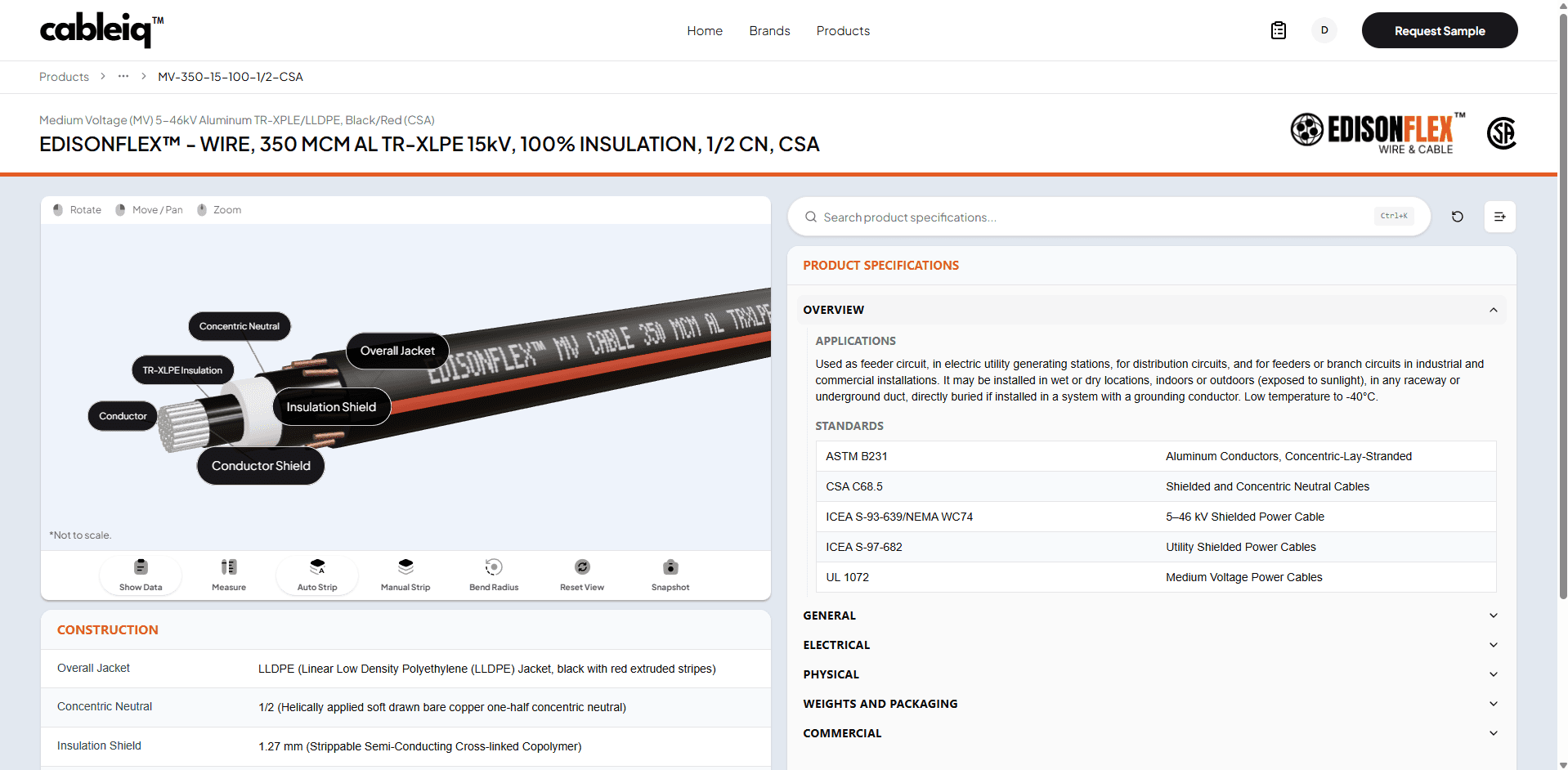
CableIQ demonstrates what a production-grade product configuration platform looks like — a real system replacing static documentation with a structured, interactive product environment.
Approach
How we structure delivery
Configuration platforms require the data model and rules logic to be correct before interface design begins. We sequence delivery to validate the logic before investing in presentation.
Product data audit
Understand the structure of the product catalogue, variant logic, and configuration rules before designing the system. Surprises at this stage are cheap.
Rules modelling
Define and validate the configuration logic — option dependencies, constraints, and valid state spaces — before any interface work begins.
3D and interface design
Build the visual and interaction layer around the validated rules model, ensuring the presentation accurately reflects configuration state at all times.
Output integration
Connect the configuration state to downstream documentation generation, data systems, and technical output pipelines.
Validation and launch
Verify accuracy against real products and known configurations. The configurator goes live only when engineering and sales teams trust the output.
Who it's for
Designed for manufacturers and technical teams
Product configurators are most valuable where product complexity creates friction in sales, specification, or engineering handoff — and where configuration accuracy directly affects production outcomes.
Roles
Sectors
Build with accuracy
Configuration that engineers can trust
Tell us about your product and the teams who need to configure it. We'll design a system that is accurate, usable, and connected to your real product data.
Tell us about the project
A short description of the problem, the context, and what you need to achieve is enough to get started.
We scope it together
We will map the constraints, define what is realistic, and put together a build plan that can actually be delivered.
We build and ship it
Production-grade delivery with clear communication throughout. One team, one build, no gaps in between.